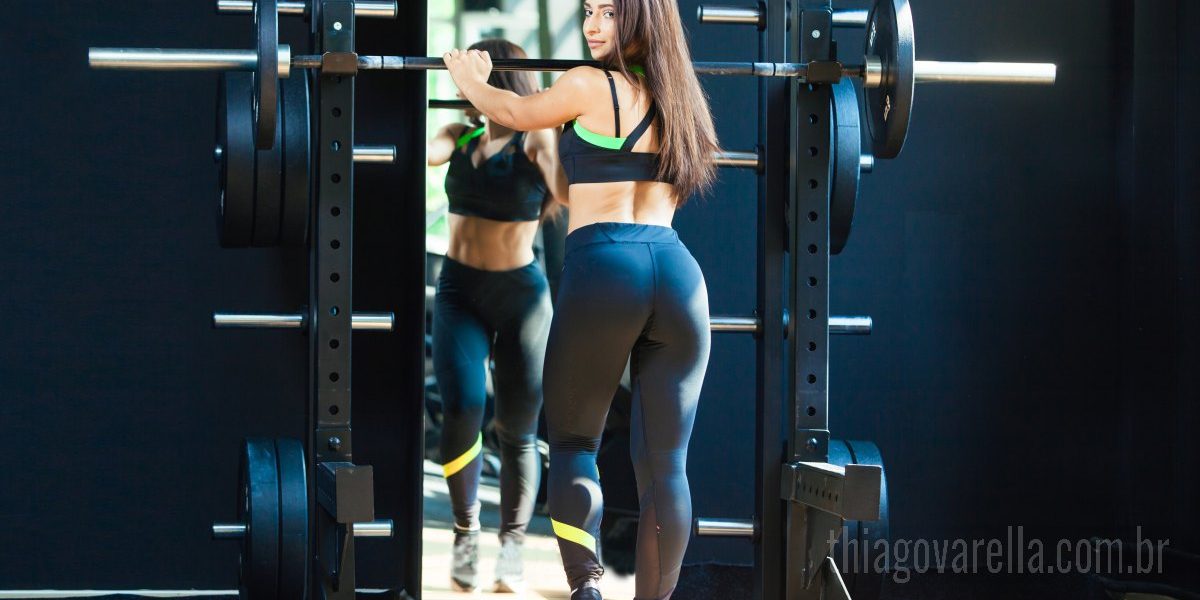
The Smith machine lunge is one of the best exercises for the lower body. But do you know how to perform it correctly?
Lunges are an excellent option for anyone who wants to develop their lower body in a short amount of time. However, we know it is important to lower yourself through the fullest possible range of motion so that the muscles are worked thoroughly.
In this article, I’ll give you some tips for performing lunges that you can put into practice in your next workout.
Tips for performing lunges
How do you perform a Smith machine lunge?
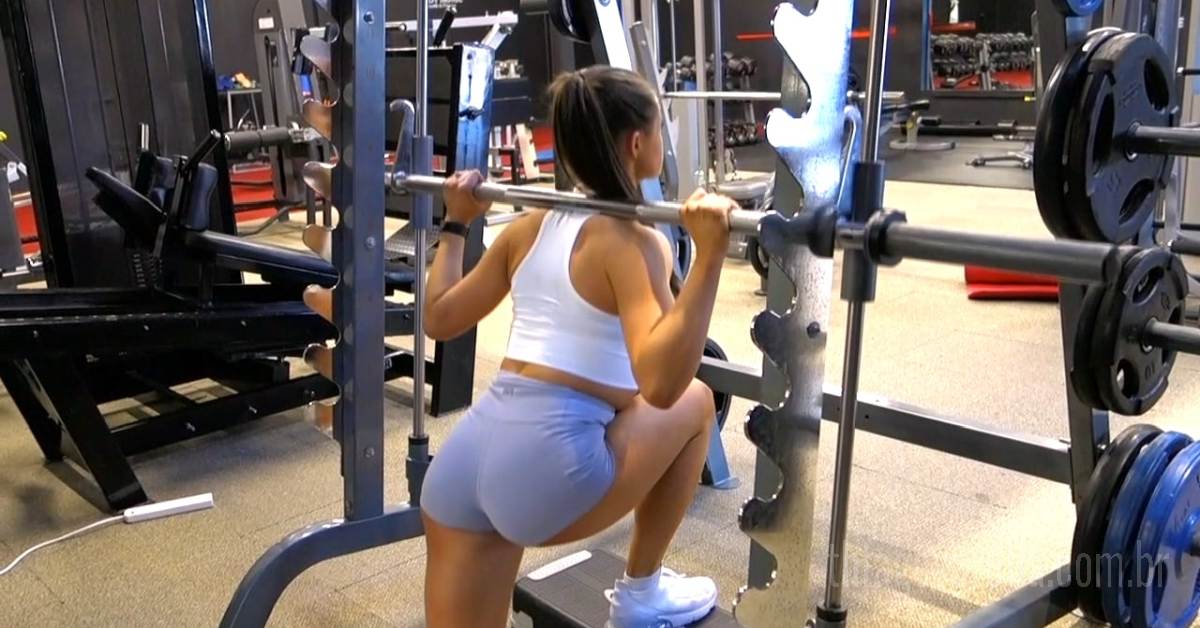
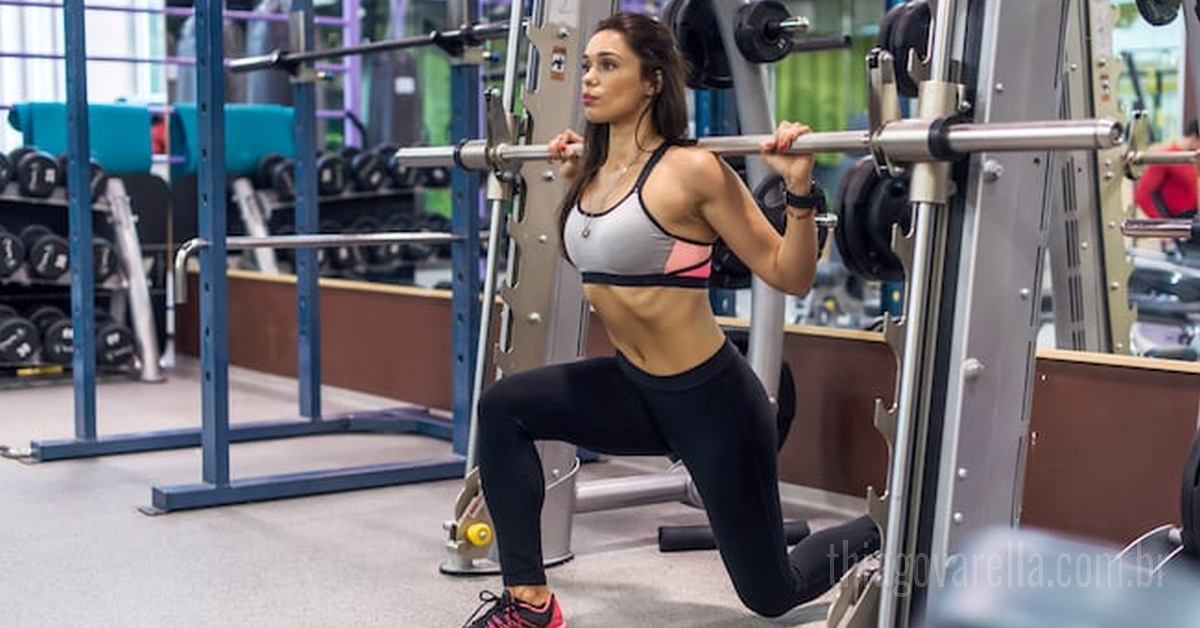
The Smith machine lunge is very similar to the Bulgarian squat. The difference between the two exercises is that in the lunge, the step is in front of you, unlike in the Bulgarian squat, where it is behind you.
During the movement, the back leg limits spinal extension, which makes the lower back handle the extra load much more comfortably.
 There are also variations that don’t use the Smith machine, performed with weight plates or dumbbells.
Lunge vs. Bulgarian squat
Lunges and Bulgarian squats are very similar exercises.
The Bulgarian squat is essentially a Smith machine lunge with the back leg elevated on a step (or bench). There are also variations that don’t use the Smith machine, which can be performed with dumbbells or weight plates (which allow for a secure and comfortable grip), as shown in the video.
 Among all the nonsense we find online, this is an exercise that doesn’t get much attention.
In this variation, raising the back leg involuntarily shifts the center of gravity further toward the front leg, and consequently increases the load from your body weight (plus any weight you are carrying).
Tips for better lunge form
Here are some essential tips to get your form right and achieve better results during your lower-body workout.
1. Position the bar at trapezius height
A very common mistake when performing lunges is placing the bar at the level of the cervical spine. You need to position the bar across your trapezius muscles.
Remember that your torso should be aligned with the bar so that it doesn’t interfere with your foot positioning.
Pay close attention to this, because performing the exercise with incorrect positioning can cause serious injuries and keep you away from the gym for a long time.
2. Pay attention to your foot position
To perform lunges with perfect form, place one foot forward, aligned with the toes, and the other leg behind you.
Move the back leg as far back as you can. Some people also prefer to position the front leg and lower themselves at the same time.
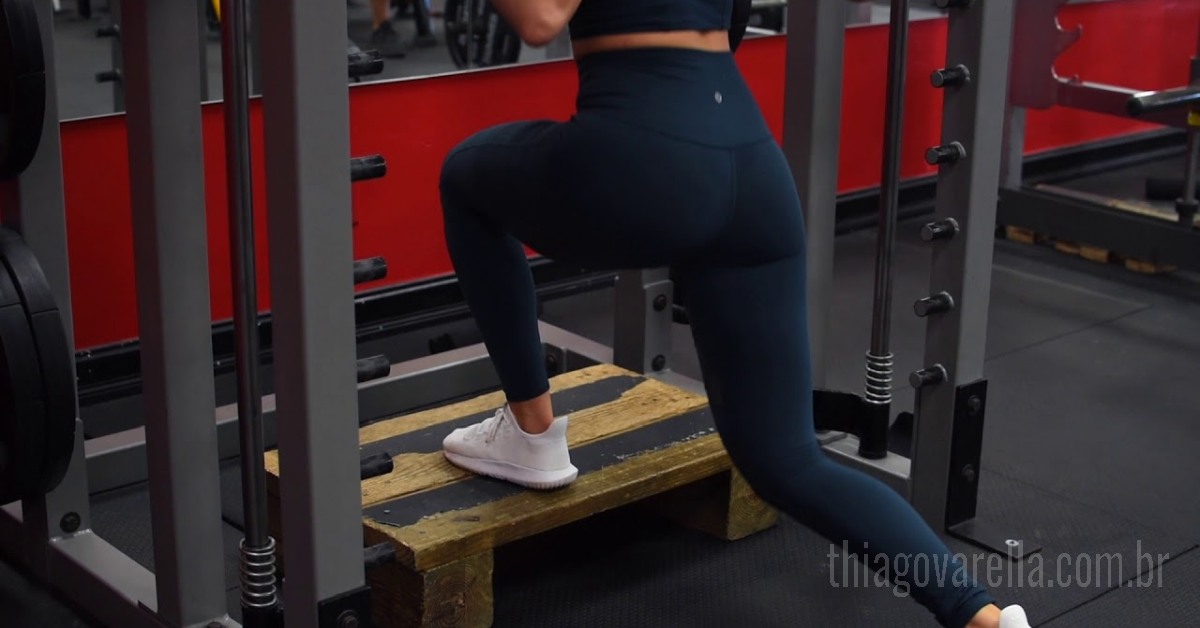 Don’t forget to control your tempo as you lower yourself and perform the movement. This will help you get much more out of the exercise.
If you don’t yet know why range of motion is important, read our full article on the subject.
3. Don’t let your knee turn to the side
Another very common mistake when performing lunges is letting the knee move out to the side as you lower yourself and perform the movement.
Your knee should always be aligned with your toes. Don’t let your knee turn as you lower yourself. After that, your form is correct; just adjust the load so you can start progressing with the exercise.
4. Use a step to get better results
I’ve already mentioned the importance of using a step for the Smith machine lunge. I’ll explain in more detail why you should use one.
To make the exercise more effective, you can place a step in front of you to increase your range of motion.
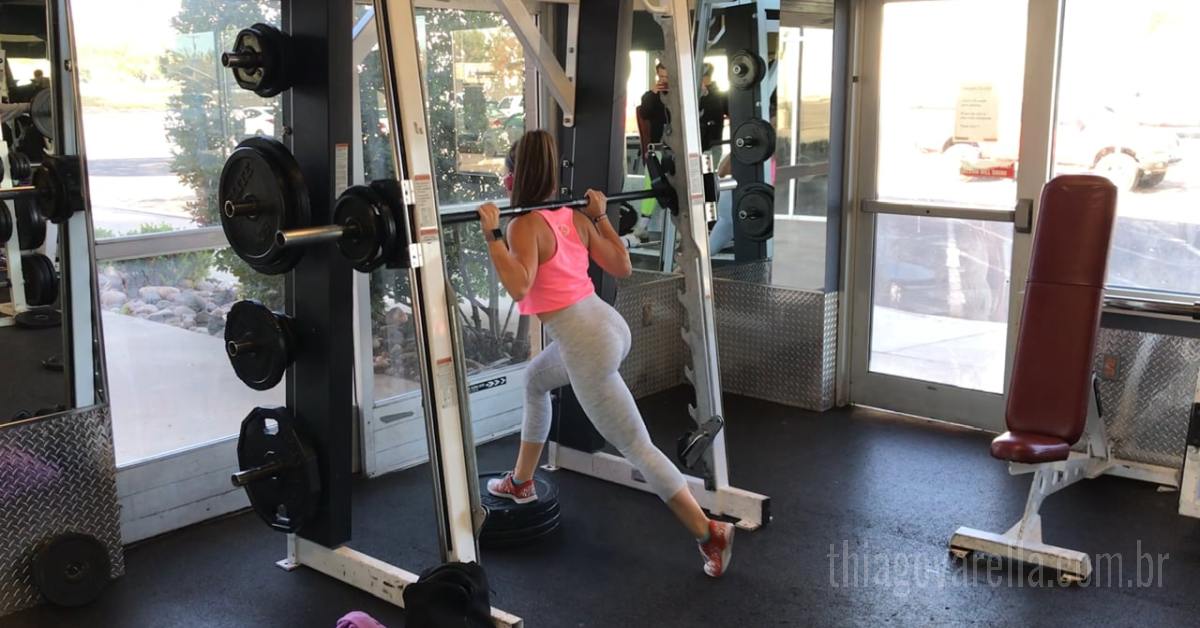 The step makes the exercise much more challenging and increases the force produced by the leg you’re supporting yourself on. This allows for a much greater range of motion, helping you get the most out of the exercise.
Once again, during the lunge, the step goes in front of you. If you place the step behind you, you’re actually doing a Bulgarian squat.
5. Control your tempo
Always remember to control your movement. I see people rushing through squats without any thought.
Besides considerably increasing the risk of injury, doing this also hinders your progress, because controlling your movements during each rep is what causes more microtears in the muscles.
There are countless variations with slower and faster tempos. These should be prescribed by a qualified professional!
Final thoughts
Finally, these are the tips I’ve put together to help you get the most out of lunges and achieve better results. Once again, when performed correctly, lunges are one of the best exercises for the lower body.
The muscles primarily targeted during lunges are the quadriceps and glutes, while the hamstrings help stabilize the movement.
 To recap, pay attention to your posture, foot and knee position during the exercise, and use a step to make the movement more complete and effective.
I hope these tips help you avoid mistakes when performing lunges during your lower-body workout! If you still have questions about how to perform lunges, leave them in the comments. I’ll be happy to answer!
That’s all for today. #LETSWORKOUT