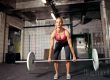
How to do the stiff-leg deadlift correctly
The stiff-leg deadlift is one of the best exercises for the lower body! Anyone aiming for beautiful glutes and legs shouldn’t leave it out of their workout… But it’s important to take some precautions when performing it and avoid some very common mistakes that can cause injuries!
Stiff-leg deadlift mistakes
The main mistake when performing this exercise is rounding your torso as you lower the bar… This puts strain on your lower back and could eventually even cause a herniated disc.
Lowering the bar with your head raised and looking toward the mirror, for example… Your head should stay aligned with your torso to avoid straining your neck. Maintain good posture throughout the movement.
The stiff-leg deadlift and your forearms
The stiff-leg deadlift, for example… Anyone who does stiff-leg deadlifts knows this… It’s one of the best exercises for the glutes and hamstrings, but it relies heavily on a good grip and core strength. After a few reps, your forearms and wrists start to complain, right? And maybe your lower back complains a little (or a lot), too.
That’s all because your upper-body muscles aren’t strengthened, or at least not in the same way as the muscles in your legs and glutes.
And please, don’t tell me you don’t want to look “masculine.” That won’t happen, especially because of the hormonal differences between men and women.
How to progress with the stiff-leg deadlift for glutes
The stiff-leg deadlift is a suitable training exercise for increasing muscle hypertrophy and strength, and for developing the hamstrings’ range of motion, for almost all athletes.
Because this exercise is an isolation movement, most athletes and coaches should perform it with moderate weights to maximize hypertrophy before moving on to more advanced strength and/or speed techniques.
Whatever weight you use, remember that how you perform the exercise and its range of motion have a significant impact on your results.