What are the best exercises for people aged 40 and over? How should your workout change compared with that of someone half your age?
To achieve muscle hypertrophy after 40, you need to focus on the key points related to the goals you want to achieve!
But this may be one of your biggest dreams: having the body you’ve always wanted!
Once you turn 40, you may start wondering what this means for your workout plan.
In this article, we’ll try to help you break free from limiting beliefs and achieve the body you’ve always dreamed of. Learn all about muscle hypertrophy for women over 40.
Muscle hypertrophy for women over 40
When it comes to weight training for women over 40, the first step is to understand that after this age, training needs to be more specific to certain functions.
Therefore, people over 40 who are already doing weight training need to train systematically and receive ongoing guidance for more than six months.
The best workout for women over 40
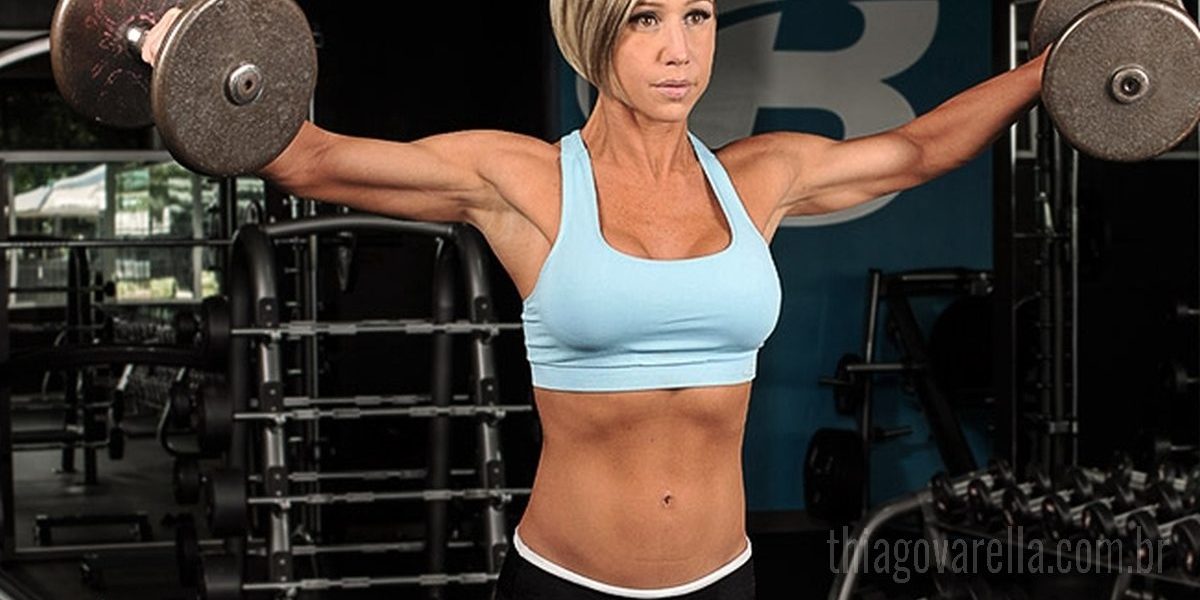
Without a doubt, the best individual workout option for women in their 40s is a good strength training plan.
It’s extremely important for women at this age to start strength training if they haven’t already, because you’re at greater risk of losing lean muscle mass at this age.
It’s the old “use it or lose it” principle. If you don’t put enough stress on your muscles as the weeks go by, you’ll gradually get weaker, which can make everyday activities harder to do.
 Likewise, your lean muscle mass is the most metabolically active tissue in your body. So the more muscle you lose, the slower your basal metabolic rate will become, which can contribute to weight gain.
Workout tips for women over 40
1. Try a good warm-up
Before you start strength training, do a general warm-up.
Low-impact activities are ideal, such as using a stationary bike or other cardio equipment.
This shouldn’t take more than a few minutes; just get your blood flowing.
 If you’re feeling “stiff” (especially during the colder months), add a few more minutes than usual. A good rule of thumb is to work up a light sweat.
2. Choose joint-friendly exercises
For example, using dumbbells for the bench press is easier on many trainees’ shoulders and elbows than using a barbell, because it allows for natural movement at the wrists, elbows, and shoulders.
Another strength training tip: make good use of a neutral grip for upper-body pushing and pulling exercises. If you’re unsure how to perform them, look for videos on YouTube.
Keep this in mind when choosing pulldown bars for the cable machine, seated rows, pull-up bars, and when pressing dumbbells.
 For example, some people find that pressing a dumbbell overhead with their palms facing forward aggravates their shoulders, but they feel no pain when pressing with a neutral grip; the same goes for dumbbell bench press variations.
3. Choose a specific workout split
Some people use strength training to complement other activities, so they only want to work out two to three times a week.
For others, strength training may be their primary form of physical activity, so they train four or more times a week.
Depending on how many days a week you want to strength train, some workout splits are better than others.
4. Listen to your body and know your limits
If doing three total workouts a week leaves you very tired, change your routine.
Try working out every three days instead of every two, or switch to an upper/lower split so each muscle group has more time to recover.
 Likewise, maybe you love squatting with a heavy barbell on your back and pulling a loaded barbell off the floor, and you can do this without any problems and take offense at suggestions that you stop or “slow down”; keep doing it.
Pay attention to your body’s feedback and keep track of what you’re doing so you know what’s working and what isn’t. Then adjust as needed.
Conclusion
To achieve hypertrophy after 40, it’s important to do flexibility training tailored to your needs so the quality of your weight training isn’t affected. If you’re active, you should keep training and, most importantly, be aware that these concerns relate to improving function.
Women should also aim for a balanced diet to help maintain lean or muscle mass, with support from a sports nutritionist.
 Did you enjoy this content about muscle hypertrophy for women over 40? Share it with a friend who’s also working out and help her get better results, and #JOINTHETRAINING!