Glute workout for people with a small butt
Are your glutes no longer growing? Here are a few tips.
This is even more common among women who have been training for a long time and whose results have plateaued.
Prioritize range of motion
Reassess the weights you use… yes… often, you shouldn’t increase the weight; instead… reduce it and prioritize your range of motion!
For example, when doing a Smith machine lunge… if you do it without a step… try reducing the weight and adding a step to increase your range of motion.
Control your tempo
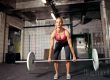
I see people doing squats quickly, with no criteria at all.
Besides considerably increasing your risk of injury, doing this also hinders your progress, because controlling the movements as you perform them creates more microtears in the muscles.
There are countless variations
With slower and faster tempos, you can stop having a small butt. And they need to be prescribed by a qualified professional!
Focus on compound exercises and forget about trendy moves
Please, I’ve said this many times, but it’s always worth repeating… lol. Don’t make things up or follow the trend of influencers doing little kicks upward and saying they’re good for your butt… Stick to the tried-and-true glute exercises! Squats… lunges… leg presses… stiff-legged deadlifts… and, if needed, one or two isolation exercises, okay!
Adjusting your workout when your butt isn’t growing
Range of motion comes first!
Another option is to increase the weight you use for specific movements. Just make sure to increase the weight slowly. Increase it too much, too quickly, and you risk injuring yourself.
Also pay attention to the tempo of each exercise.
Tempo (the regularity of movements) is a more important variable than simply increasing the “weight,” because indiscriminately increasing the load can limit your range of motion and compromise proper exercise technique. In extreme cases, it can lead to unwanted injuries.
Exercise tempo can be prescribed as 1010, 2020, 3010, etc. The first number refers to the phase moving with the weight, and the second refers to the transition phase from the concentric to the eccentric movement.
The third number refers to the phase moving against the weight, and the fourth number is also a transition phase before the first number.
Pay attention to your posture, too. If you think proper posture doesn’t affect your gains, I have bad news for you. It has a direct impact! And that’s one of the key factors in getting results with lighter weights.
Finally, that’s all. Apply these techniques and your glutes will definitely grow.